𝔼𝕩𝕡𝕠𝑀𝑜𝒹



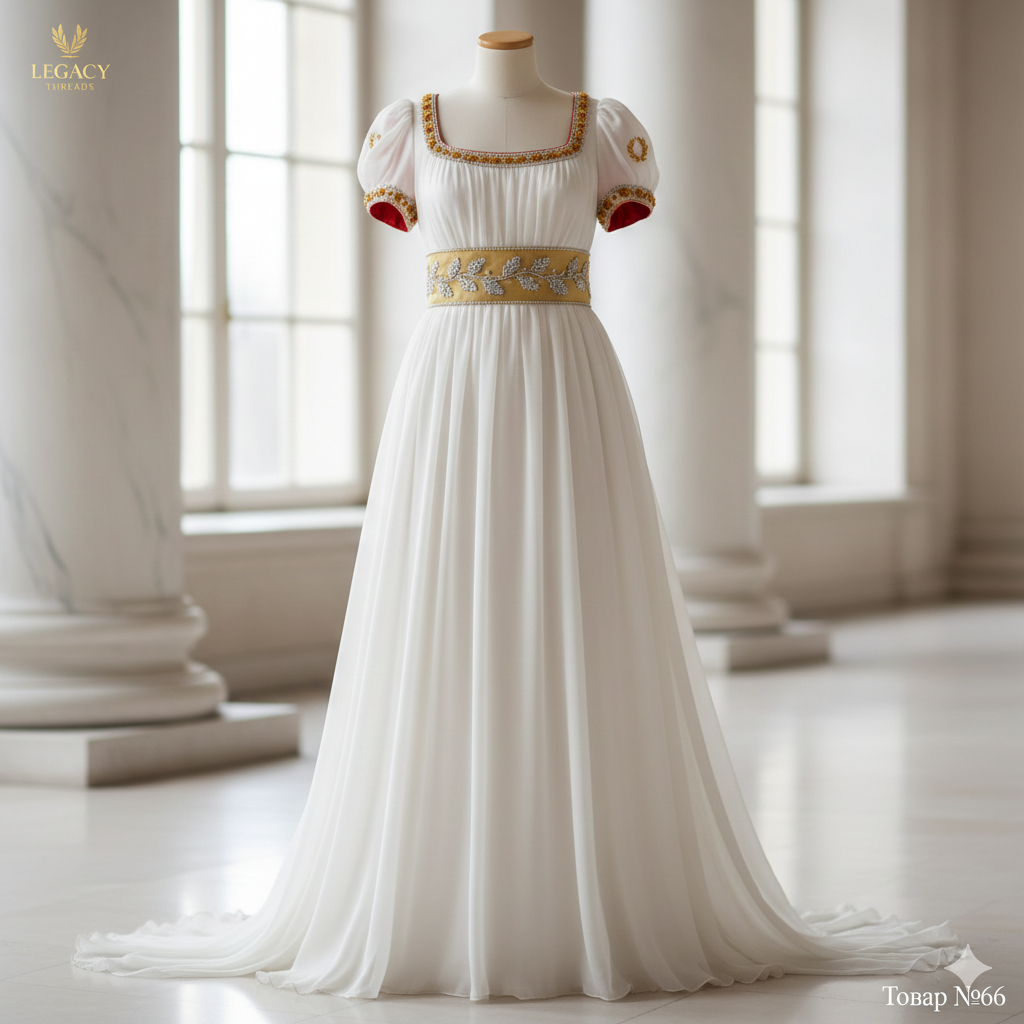
The "General's Daughter" gown embodies the sophisticated elegance of the Empire waistline, reinterpreting military prestige for a lady of distinction. While men wore their uniforms on the battlefield, women of influence often incorporated subtle nods to military themes in their lavish evening wear, celebrating the triumphs of their nation.
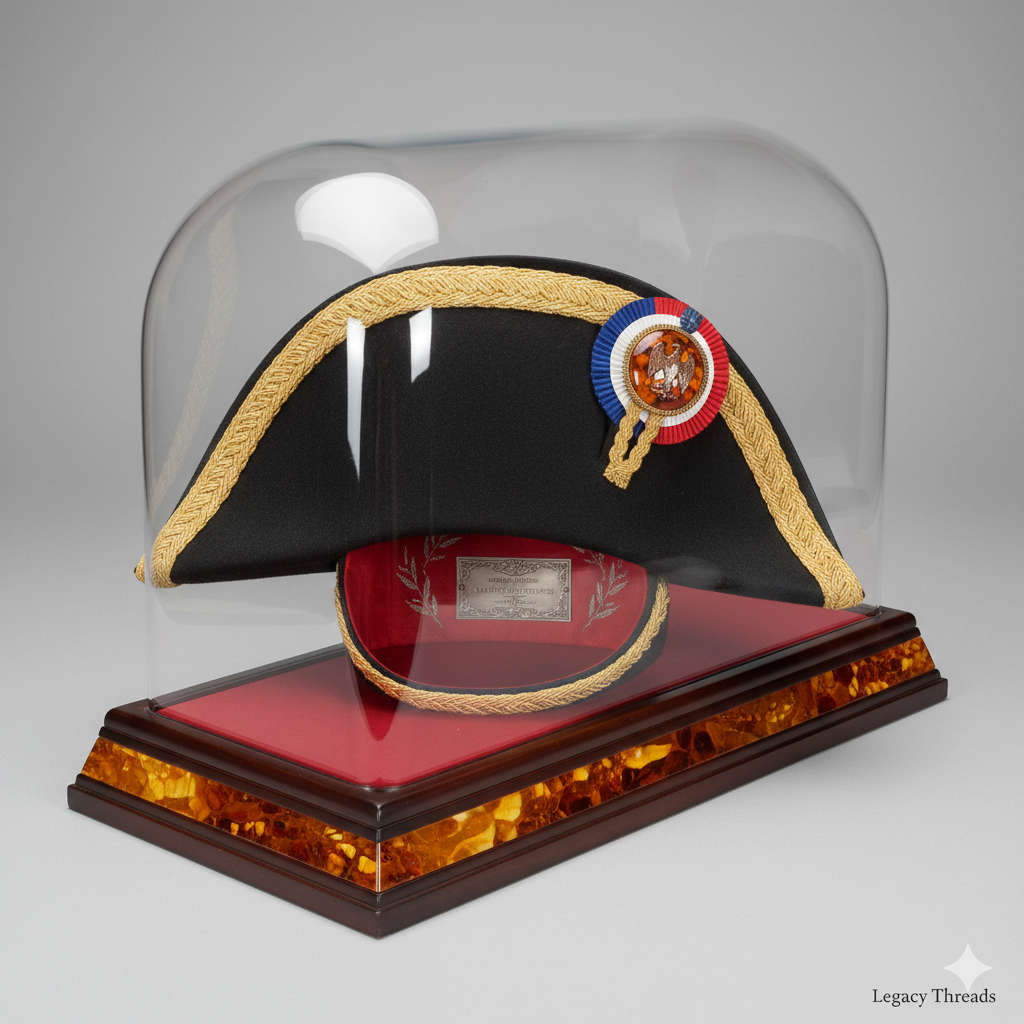
The "Emperor's Shadow" is the ultimate symbol of the Napoleonic era—the iconic side-to-side bicorne hat that became synonymous with the Emperor's silhouette on the horizon. While most officers wore their bicornes "en colonne" (front-to-back), Napoleon famously wore his "en bataille" (side-to-side) to be easily identified by his troops.
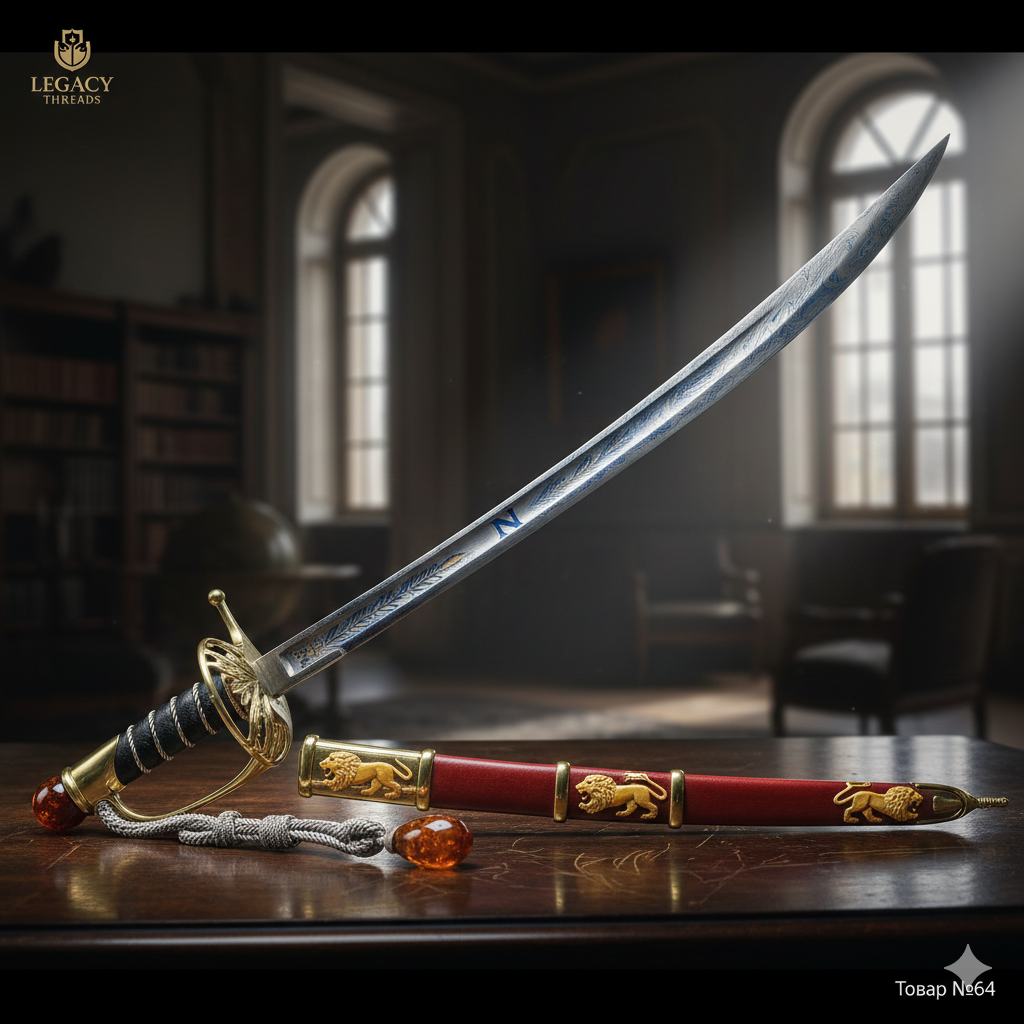
The "Guard's Honor" is a ceremonial light cavalry saber, modeled after the legendary French An XI pattern used by the Chasseurs à Cheval of the Imperial Guard. In the early 19th century, a finely balanced saber was a soldier's most trusted companion and a mark of his social standing.
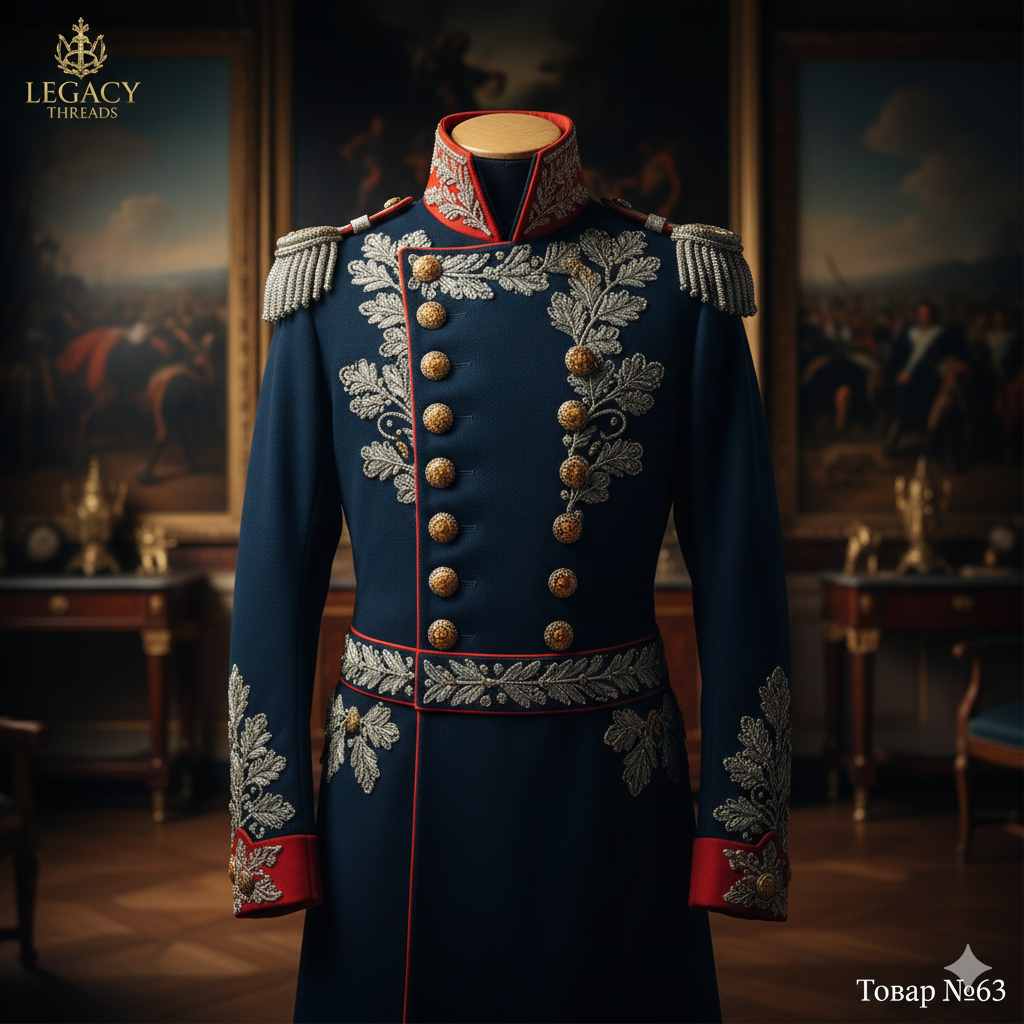
The "Marshal of the Empire" is a masterpiece of military tailoring, inspired by the grand uniforms of the Napoleonic General Staff. This double-breasted dress coat (habit-veste) features the classic high standing collar and short front cut, designed to be worn with tight-fitting breeches and high cavalry boots.
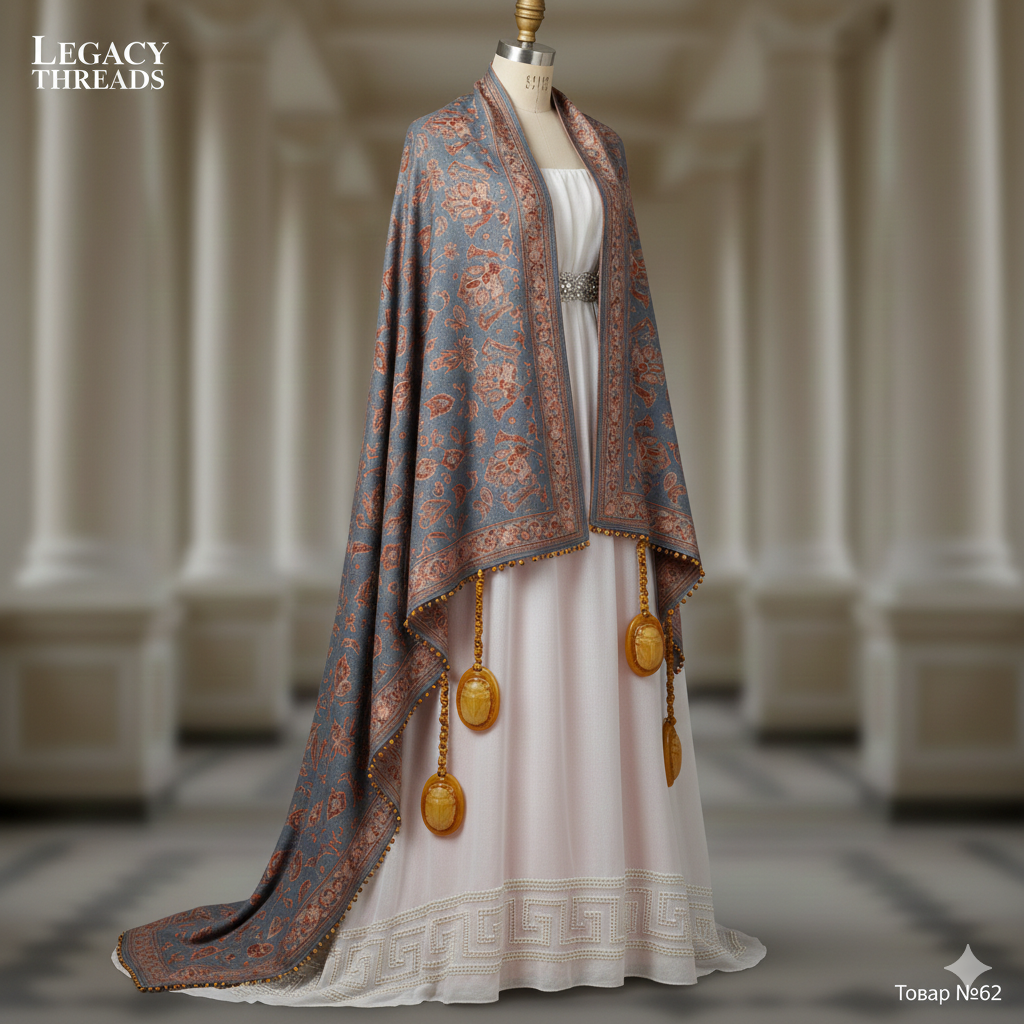
The "Nile Lily" is an exquisite cashmere shawl, a tribute to the "Egyptomania" that swept through Europe following Napoleon's campaigns. In the early 1800s, a genuine pashmina or cashmere shawl was the ultimate status symbol, often costing as much as a small house. These shawls were essential for the thin muslin dresses of the era, providing both warmth and a splash of
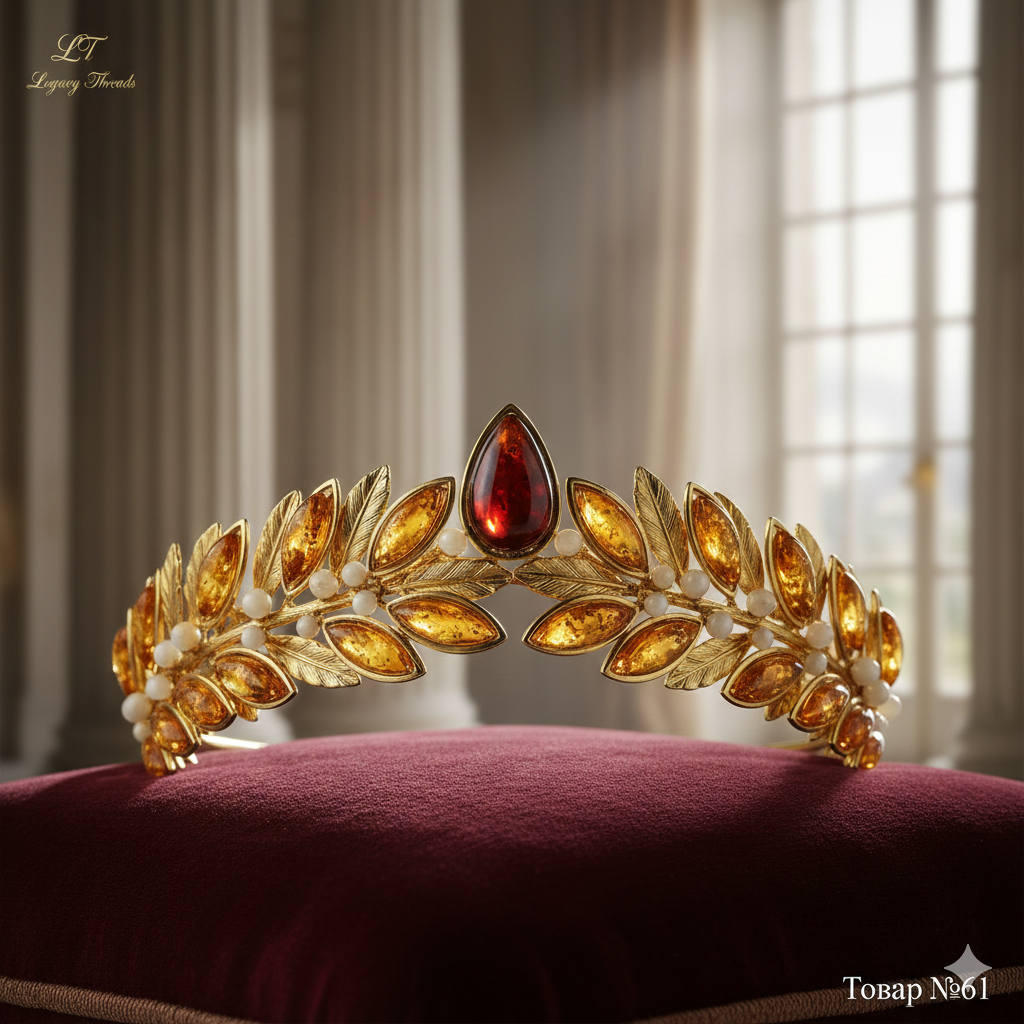
The "Josephine's Laurels" is a regal tiara designed in the classic Empire style, echoing the neoclassical revival of the Napoleonic court. During this era, jewelry was meant to look like excavated treasures from ancient Pompeii or Rome, emphasizing symmetry and botanical motifs.
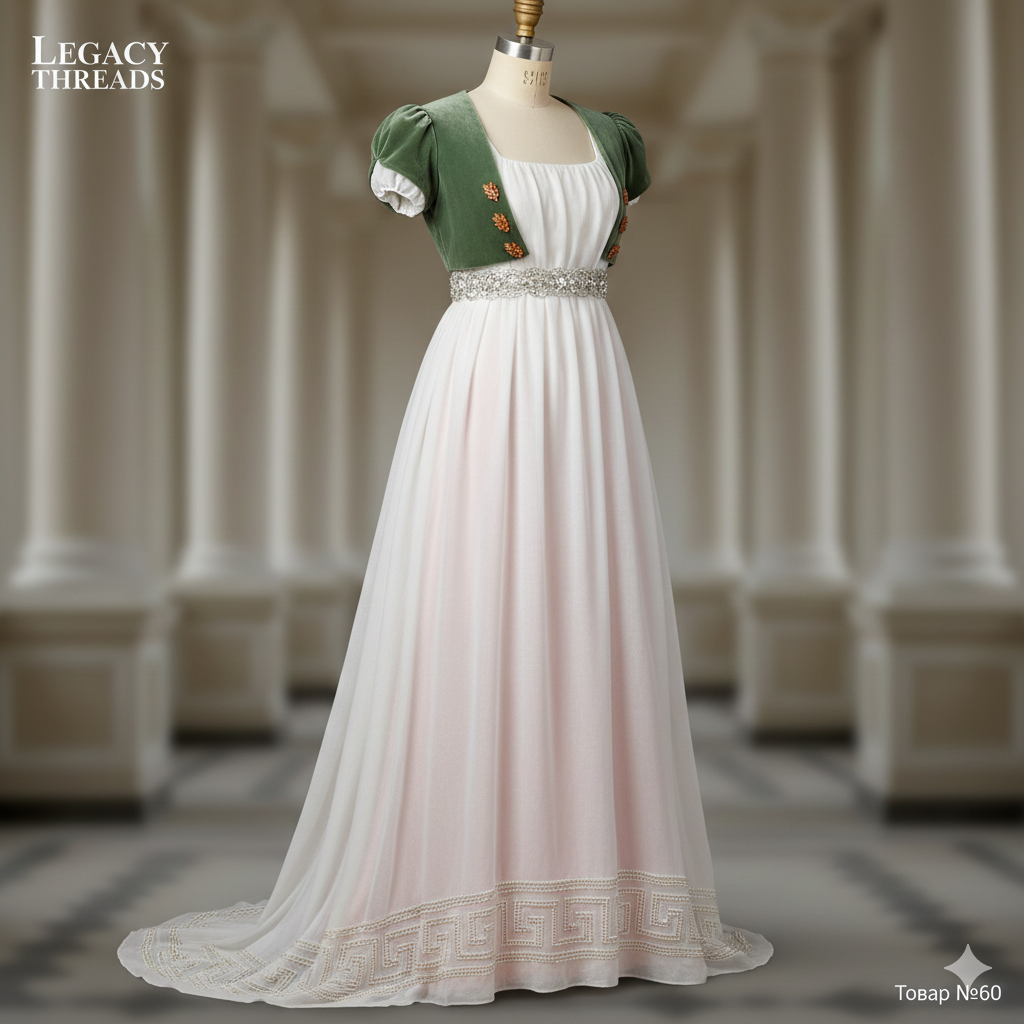
The "Muslin Nymph" is a quintessential Empire-line gown, embodying the airy elegance of the early 1800s. This silhouette liberated women from the restrictive corsets of the previous century, favoring high waists positioned just below the bust and long, flowing skirts that emphasized a statuesque posture.
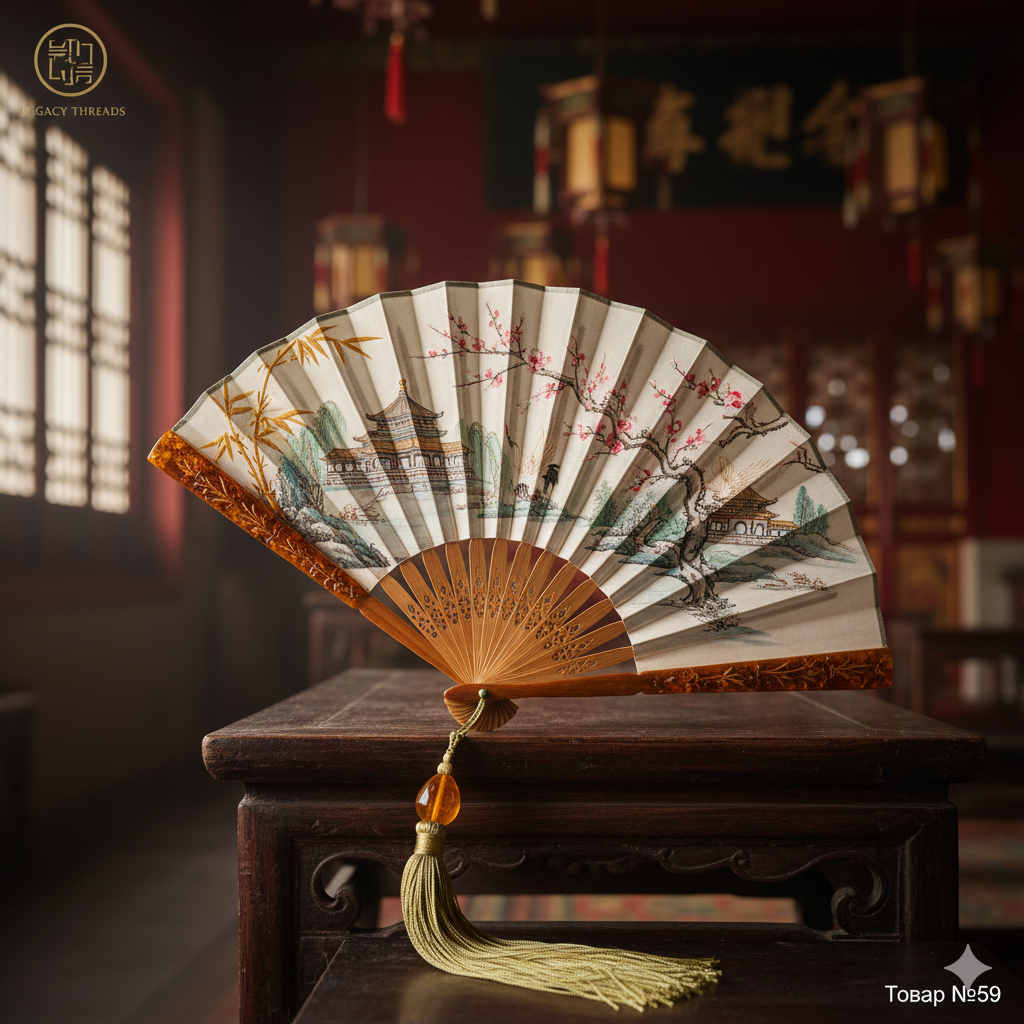
The "Forbidden Garden" is a ceremonial folding fan (Shanzhi) inspired by the private retreats of Emperor Qianlong. In the 18th century, a fan was a canvas for poetry, painting, and the finest craftsmanship, often exchanged as imperial gifts.
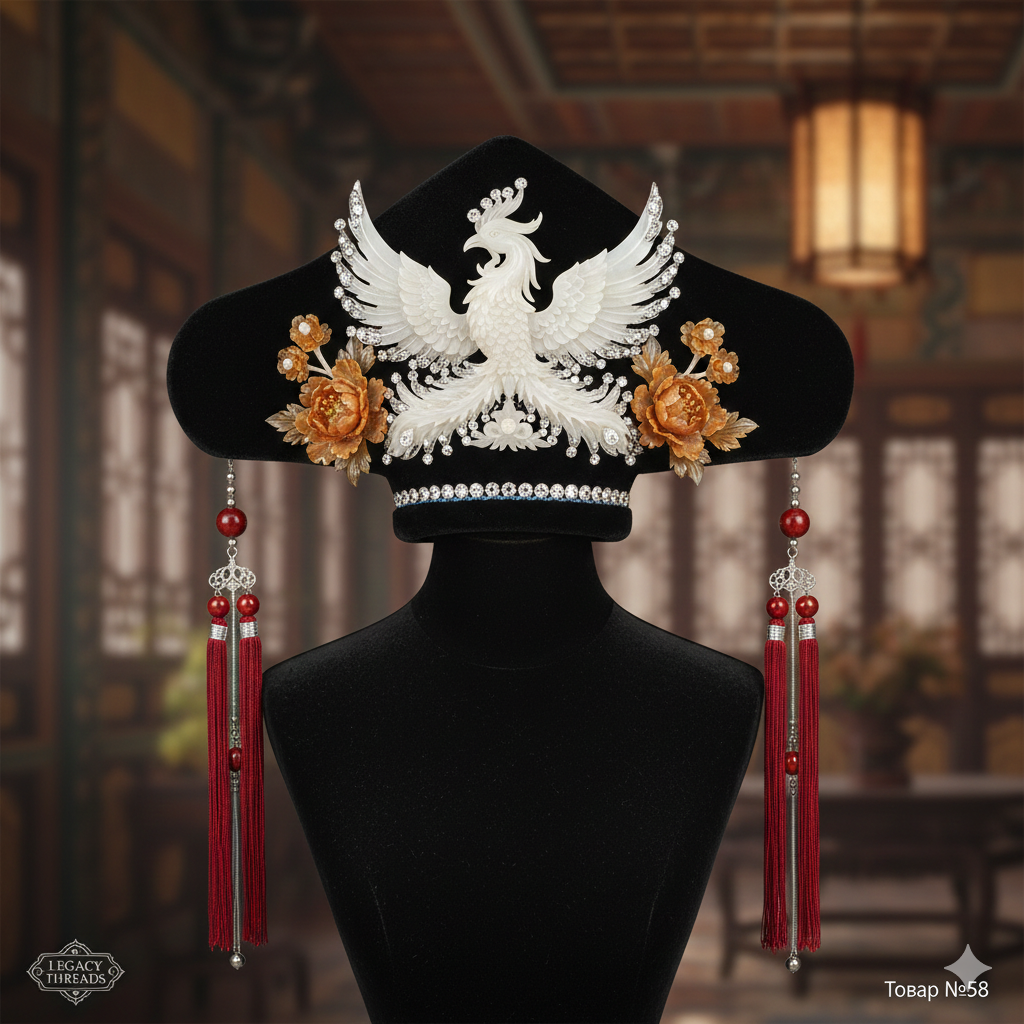
The "Cloud-Phoenix" is a luxurious interpretation of the Liangyi (or Daliangyi), the iconic wing-like flat headdress worn by Manchu noblewomen during the Qing Dynasty. This piece represents the pinnacle of "flower-and-bird" symbolism, where every element is designed to bring auspicious energy to the wearer.