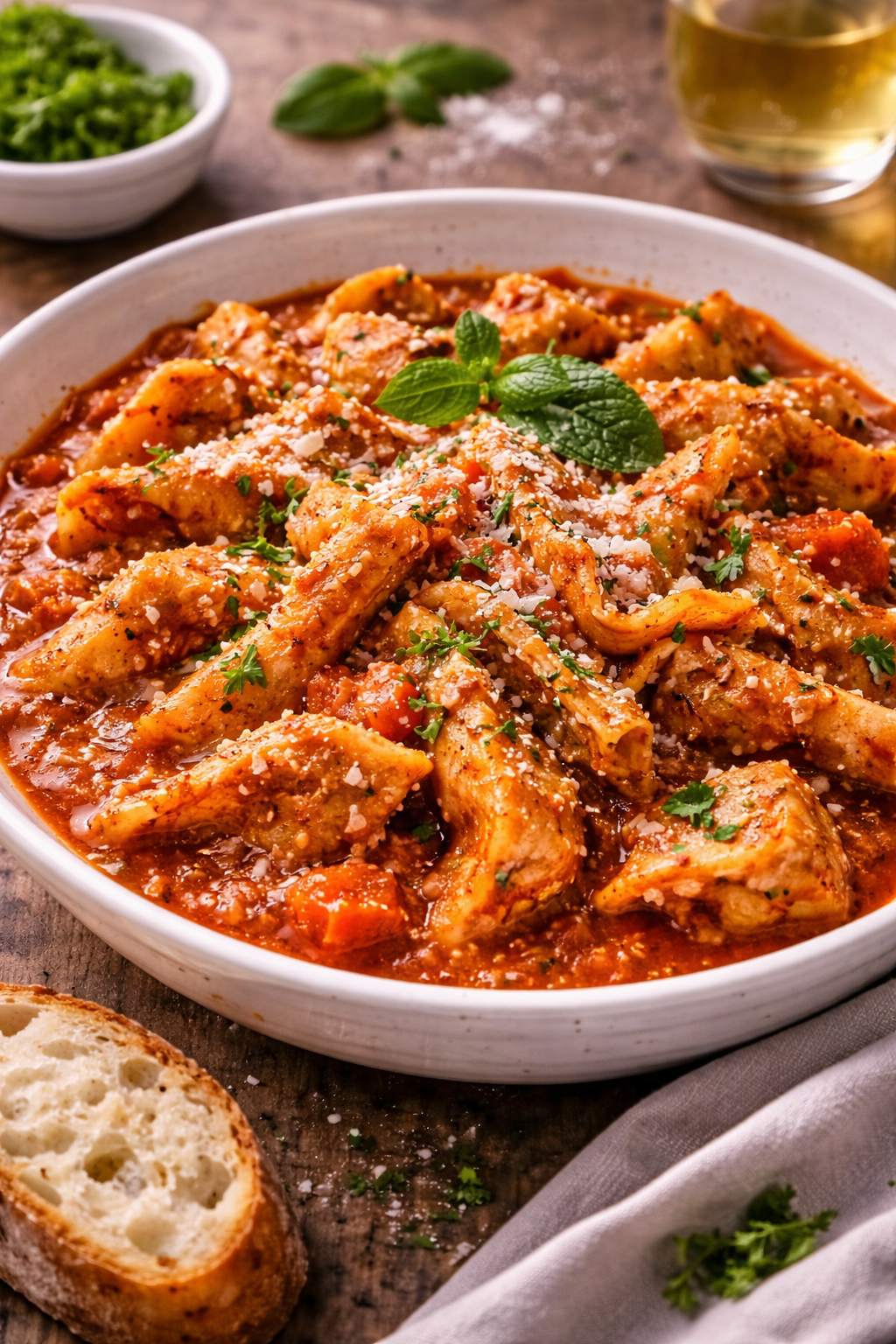
Есть блюда, которые выбирают сердцем, а есть такие, которые выбирают характером. Триппа — как раз из вторых. Это не “модная новинка” и не компромиссная еда: это честная итальянская традиция, выросшая из кухни, где уважали продукт и умели превращать простое в выдающееся. Триппа (рубец) — блюдо для тех, кто любит настоящие вкусы, глубокие соусы и тот самый комфорт, который приходит не от сладости, а от насыщенности. В Италии триппа — символ cucina povera, “кухни простых людей”, где ничего не выбрасывали и всё доводили до идеала терпением. На севере, в Милане, известна trippa alla milanese: рубец долго тушат с овощной основой, томатами, иногда с фасолью, а в финале щедро добавляют пармезан. В Риме любят trippa alla romana — с томатным соусом, мятой и пекорино: звучит неожиданно, но именно мята делает вкус легче и свежей, а сыр добавляет солёную глубину. Во Флоренции триппа — это уличная классика: её подают в панини, поливают соусом и дают тот самый вкус города, без глянца. Если говорить честно, триппу нельзя “сделать быстро”. Её сила — в медленном тушении. Рубец становится мягким, впитывает томат и аромат овощей, и соус превращается в густой, бархатный, почти “суповой” комфорт. Здесь важна текстура: она не похожа на мясо и именно этим интересна. Триппа нежная, упругая, с характером — и поэтому идеально дружит с яркими итальянскими акцентами: чеснок, сельдерей, морковь, лук, белое вино, томаты, лавровый лист, иногда перчик. А в конце — сыр, который собирает всё в одну точку и делает вкус завершённым. Триппа — блюдо, которое меняет отношение к “субпродуктам”. В хорошем исполнении она перестаёт быть “на любителя” и становится гастрономическим опытом. Это еда, которая согревает, насыщает и вызывает уважение: к кухне, к традиции, к мастерству. В ней есть взрослость вкуса — без сладкой легкомысленности. Она идеально подходит для холодного вечера, для долгого разговора за столом, для тех случаев, когда хочется не просто поесть, а почувствовать настоящий итальянский дух — плотный, тёплый и немного дерзкий. И да, триппа — это всегда история. История города, семьи, рынка, где выбирают продукты, и кухни, где аромат томатов смешивается с пармезаном. Если ты ищешь блюдо, которое выделяется среди привычных паст и пицц, которое показывает Италию глубже — выбирай триппу. Она не старается понравиться всем. Она просто остаётся собой. А у настоящей классики это самый сильный аргумент. Some dishes are chosen with the heart; others are chosen with character. Trippa belongs to the second kind. It’s not a trendy novelty and it isn’t made to please everyone — it’s an honest Italian tradition shaped by a cuisine that respects ingredients and knows how to turn something humble into something unforgettable. Trippa (tripe) is for those who love real, deep flavors, slow-cooked sauces, and the kind of comfort that comes not from sweetness, but from richness. In Italy, trippa is a symbol of cucina povera — “the cooking of ordinary people,” where nothing was wasted and everything was perfected through patience. In the north, Milan is known for trippa alla milanese: tripe slowly braised with an aromatic vegetable base, tomatoes, sometimes beans, and finished with generous Parmesan. Rome loves trippa alla romana — cooked in tomato sauce with mint and Pecorino: an unexpected pairing, but the mint lifts and brightens the dish, while the cheese adds salty depth. In Florence, trippa is street-food heritage: served in a panino, sauced up, and delivering the true taste of the city without any glossy polish. To be honest, trippa can’t be “done fast.” Its power lies in slow braising. The tripe becomes tender, absorbs the tomato and the vegetables, and the sauce turns thick, velvety, almost soup-like in the best way. Texture matters here: it’s not like muscle meat — and that’s exactly why it’s interesting. Trippa is soft yet springy, with personality, and it pairs beautifully with bold Italian building blocks: garlic, celery, carrot, onion, white wine, tomatoes, bay leaf, sometimes chili. And at the end comes cheese — the finishing touch that pulls everything together and makes the flavor feel complete. Trippa is the kind of dish that changes how people think about offal. When done well, it stops being “only for adventurous eaters” and becomes a true culinary experience. It’s warming, satisfying, and it earns respect — for the tradition, for the craft, for the patience. There’s a grown-up depth to it, without any sweet lightness. It’s perfect for a cold evening, a long conversation at the table, and moments when you don’t just want to eat — you want to feel Italy’s deeper spirit: hearty, warm, and a little bold. And yes — trippa is always a story. A story of a city, a family, a market stall, and a kitchen where the aroma of tomatoes meets the savory finish of aged cheese. If you want something beyond the familiar world of pasta and pizza, something that shows a deeper Italy, choose trippa. It doesn’t try to be loved by everyone. It simply stays true to itself — and that’s the strongest argument a classic can have.