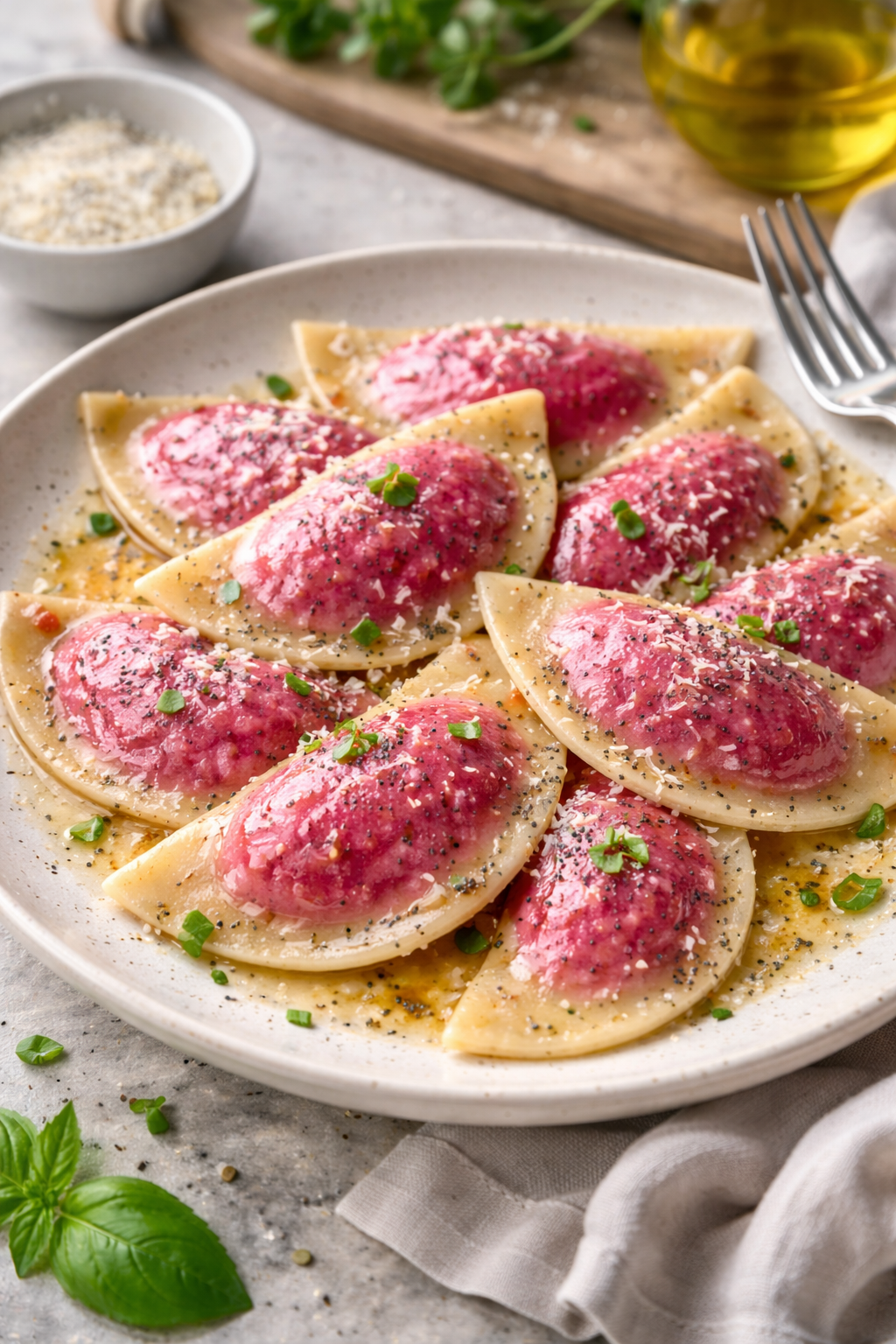
Казунцей — это блюдо, которое выглядит скромно, но работает как гастрономический магнит. Небольшие полумесяцы из тонкого теста, начинённые нежной свекольной массой, при подаче превращаются в яркое впечатление: сладковатая земляная свёкла, тёплое сливочное масло, пармезан и лёгкий ореховый штрих мака. Вкус одновременно «домашний» и ресторанный — тот самый, который запоминается с первого раза. Родина казунцея — северо-восток Италии, Доломиты, особенно район Кортины-д’Ампеццо (Венето), где это блюдо считается местной классикой. Там казунцей любят за простоту и смысл: в нём нет показной роскоши — только точная техника и продукты, которые дают максимум вкуса. Не зря в традиции встречаются и другие начинки (например, «зелёные» варианты со шпинатом), но именно «красный» свекольный казунцей стал символом региона. Главная фишка казунцея — баланс. Свёкла даёт мягкую сладость, тесто — упругую нежность, масло — округлую сливочность, а пармезан добавляет солоноватую глубину. Мак не кричит, а подчёркивает: создаёт тонкую текстуру и тот самый «взрослый» послевкусный акцент. В результате блюдо не перегружает, но насыщает — и физически, и эмоционально. Казунцей идеально вписывается в современный ритм: его можно подавать как уютный семейный ужин «без повода» или как эффектную позицию для гостей. Он визуально красив — яркий цвет начинки и аккуратные полумесяцы сразу делают тарелку фотогеничной. А ещё он очень честный: если вы любите блюда, где вкус строится на качестве и правильной подаче, казунцей попадает точно в цель. Это тот редкий случай, когда традиция звучит современно. Казунцей не требует сложных объяснений — достаточно одного укуса. Потому что он про тёплую Италию Альп: про кухню, где ценят простые продукты, мастерство рук и тот самый комфорт, который не надо оправдывать. Попробуйте казунцей — и вы поймёте, почему в Доломитах это блюдо передают как семейную гордость: маленькие полумесяцы, которые умеют делать день вкуснее. Casunziei is a dish that looks modest, yet works like a true gastronomic magnet. Small half-moons of delicate pasta dough, filled with a silky beet mixture, turn into something unforgettable the moment they hit the plate: the gentle sweetness and earthy depth of beetroot, warm melted butter, Parmesan, and a subtle, nutty touch of poppy seeds. The flavor feels both “homey” and restaurant-worthy — the kind you remember after the very first bite. Casunziei comes from northeastern Italy, the Dolomites — especially the area around Cortina d’Ampezzo (Veneto), where it’s considered a local classic. People love it for its simplicity and meaning: there’s no showy luxury here, only precise technique and ingredients that deliver maximum flavor. It’s no surprise that other fillings exist in tradition as well (including “green” versions with spinach), but the red, beet-filled casunziei has become the region’s signature. The real secret of casunziei is balance. Beetroot brings soft sweetness, the pasta gives tender bite, butter adds round, comforting richness, and Parmesan contributes a salty, savory depth. The poppy seeds don’t shout — they underline everything: they add a delicate texture and that mature, refined finish on the palate. The result is a dish that doesn’t feel heavy, yet still satisfies — physically and emotionally. Casunziei fits perfectly into a modern rhythm: serve it as a cozy family dinner “just because,” or as an impressive dish for guests. It looks beautiful, too — the vivid color of the filling and the neat half-moon shape make the plate instantly photogenic. And it’s honest: if you love food where flavor is built on quality and the right finishing touches, casunziei hits the target. This is one of those rare traditions that sounds modern. Casunziei doesn’t need long explanations — one bite is enough. Because it tastes like Alpine Italy: a cuisine that values simple products, skilled hands, and the kind of comfort you never have to justify. Try casunziei, and you’ll understand why, in the Dolomites, this dish is passed down as a family pride: small half-moons that have a way of making the day taste better.