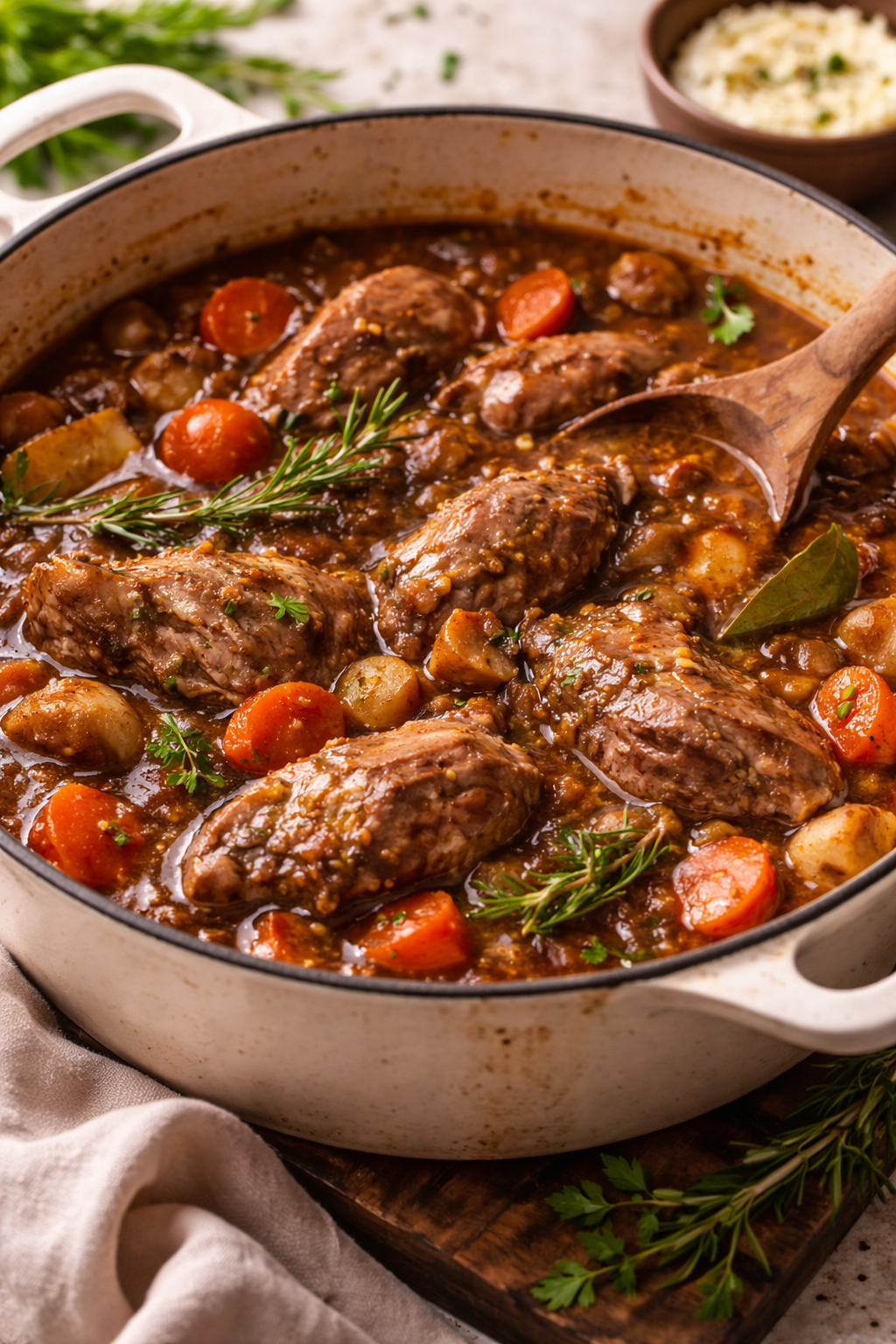
Есть блюда, которые не просто утоляют голод, а создают атмосферу. Заячье рагу — именно такое. Оно про неспешность, тепло и уважение к продукту. Про тот редкий вкус, который невозможно получить «на скорую руку»: мясо должно томиться, специи — раскрыться, соус — стать густым и бархатным. И когда вы открываете крышку, первым приходит аромат: глубокий, насыщенный, чуть лесной — как будто вся кухня превращается в уютный дом где-то рядом с природой. Заячье рагу всегда воспринималось как блюдо особенное. В нём есть характер, и он не кричащий, а благородный. Мясо зайца более плотное и выразительное по вкусу, чем привычная курица или индейка, и именно поэтому требует правильного подхода. Маринад смягчает волокна, травы и вино (или пряный бульон) добавляют глубину, а медленное тушение делает текстуру нежной — такой, что кусочек легко разделяется вилкой. В результате получается рагу, где вкус не «плоский», а многослойный: сначала чувствуешь мясо, потом пряности, затем лёгкую сладость овощей и финальную тёплую нотку соуса. Классическое заячье рагу часто готовят с корнеплодами и овощами: морковь, лук, сельдерей, чеснок, иногда грибы. Всё это не перебивает мясо, а работает как фон, который подчёркивает его природную выразительность. Травы — тимьян, розмарин, лавровый лист — добавляют «лесной» акцент. А правильно выстроенный соус связывает всё воедино: он густой, ароматный, слегка пряный, и именно он делает блюдо по-настоящему праздничным даже в обычный день. Это рагу — про комфорт высокого уровня. Его хочется есть медленно, с правильным гарниром и хорошей подачей. Картофельное пюре, полента, гречка, запечённые овощи или свежий хлеб с хрустящей коркой — всё подходит, потому что главная ценность здесь в соусе: им хочется «собирать» тарелку до последней капли. А если добавить рядом клюквенный или брусничный акцент, вкус становится ещё интереснее: ягодная кислинка идеально оттеняет насыщенность мяса. Заячье рагу — отличный выбор, когда вы хотите впечатлить без показной сложности. Это блюдо выглядит честно, а звучит дорого: глубокий аромат, плотный вкус, мягкая текстура. Оно подходит для семейного ужина, для встречи гостей и для тех вечеров, когда хочется приготовить что-то «с историей». И самое приятное: на следующий день рагу становится ещё вкуснее, потому что все вкусы окончательно «собираются» и раскрываются. Это та еда, которая умеет ждать. Если вам хочется блюда, которое возвращает к традициям, создаёт ощущение уюта и дарит настоящее гастрономическое удовольствие — заячье рагу попадает точно в цель. Оно не про спешку. Оно про вкус, который остаётся в памяти. Some dishes don’t just satisfy hunger — they create an atmosphere. Hare stew is exactly that. It’s about taking your time, warmth, and respect for the ingredient. It’s the kind of rare flavor you simply can’t get in a hurry: the meat needs to simmer slowly, the spices must open up, and the sauce has to become thick and velvety. And when you lift the lid, the first thing that hits you is the aroma — deep, rich, slightly woodland-like — as if the whole kitchen turns into a cozy home close to nature. Hare stew has always been seen as something special. It has character — not loud, but refined. Hare meat is firmer and more expressive in flavor than familiar chicken or turkey, which is why it deserves the right approach. A marinade helps soften the fibers, herbs and wine (or a well-seasoned broth) add depth, and slow braising makes the texture tender — so tender that a piece breaks apart easily with a fork. The result is a stew that isn’t “flat,” but layered: first you taste the meat, then the spices, then a gentle sweetness from the vegetables, and finally a warm, lingering finish from the sauce. A classic hare stew is often cooked with root vegetables and aromatics: carrots, onion, celery, garlic, sometimes mushrooms. None of this overpowers the meat — it works as a background that highlights its natural intensity. Herbs like thyme, rosemary, and bay leaf add a subtle forest note. And a well-built sauce ties everything together: thick, fragrant, gently spiced — the element that makes the dish feel truly festive, even on an ordinary day. This stew is comfort at a higher level. You want to eat it slowly, with the right side and a thoughtful presentation. Mashed potatoes, polenta, buckwheat, roasted vegetables, or fresh crusty bread — everything works, because the real treasure here is the sauce. You’ll want to mop up the plate to the last drop. Add a cranberry or lingonberry accent on the side, and the flavor becomes even more intriguing: that bright berry tang perfectly balances the richness of the meat. Hare stew is a great choice when you want to impress without showing off. It looks honest, yet tastes luxurious: deep aroma, full-bodied flavor, tender texture. It’s perfect for a family dinner, for hosting guests, and for those evenings when you want to cook something “with a story.” And the best part: the next day it’s even better, as the flavors settle and fully come together. This is food that knows how to wait. If you want a dish that brings you back to tradition, creates a sense of comfort, and delivers real gastronomic pleasure — hare stew hits the mark. It’s not about rushing. It’s about a taste that stays in your memory.