𝔼𝕩𝕡𝕠𝑀𝑜𝒹



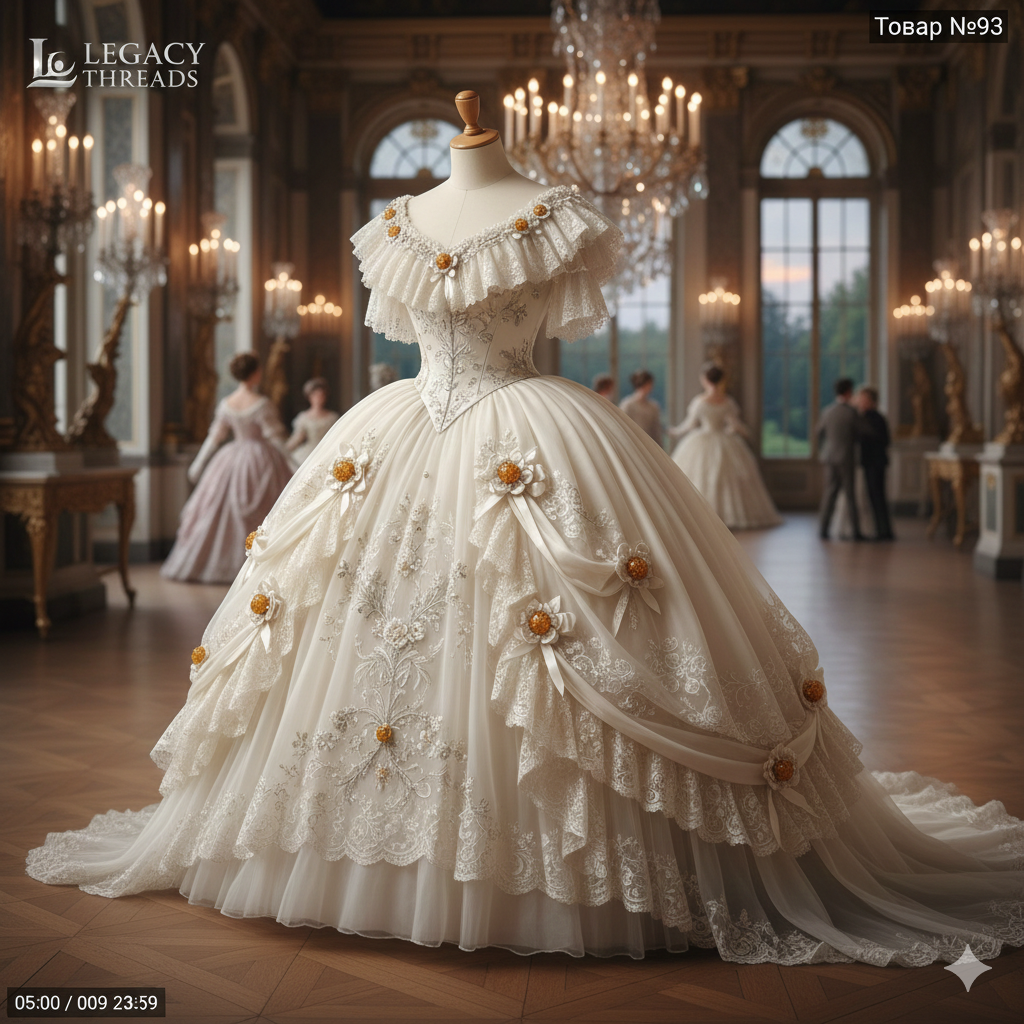
The "Imperial Waltz" Ball Gown is an exquisite recreation of a mid-1850s court dress, perfectly suited for a young Empress Elisabeth of Bavaria during her early years of marriage. This gown epitomizes the Romantic era's ideal of feminine grace, featuring a voluminous crinoline silhouette, delicate fabrics, and intricate embellishments.
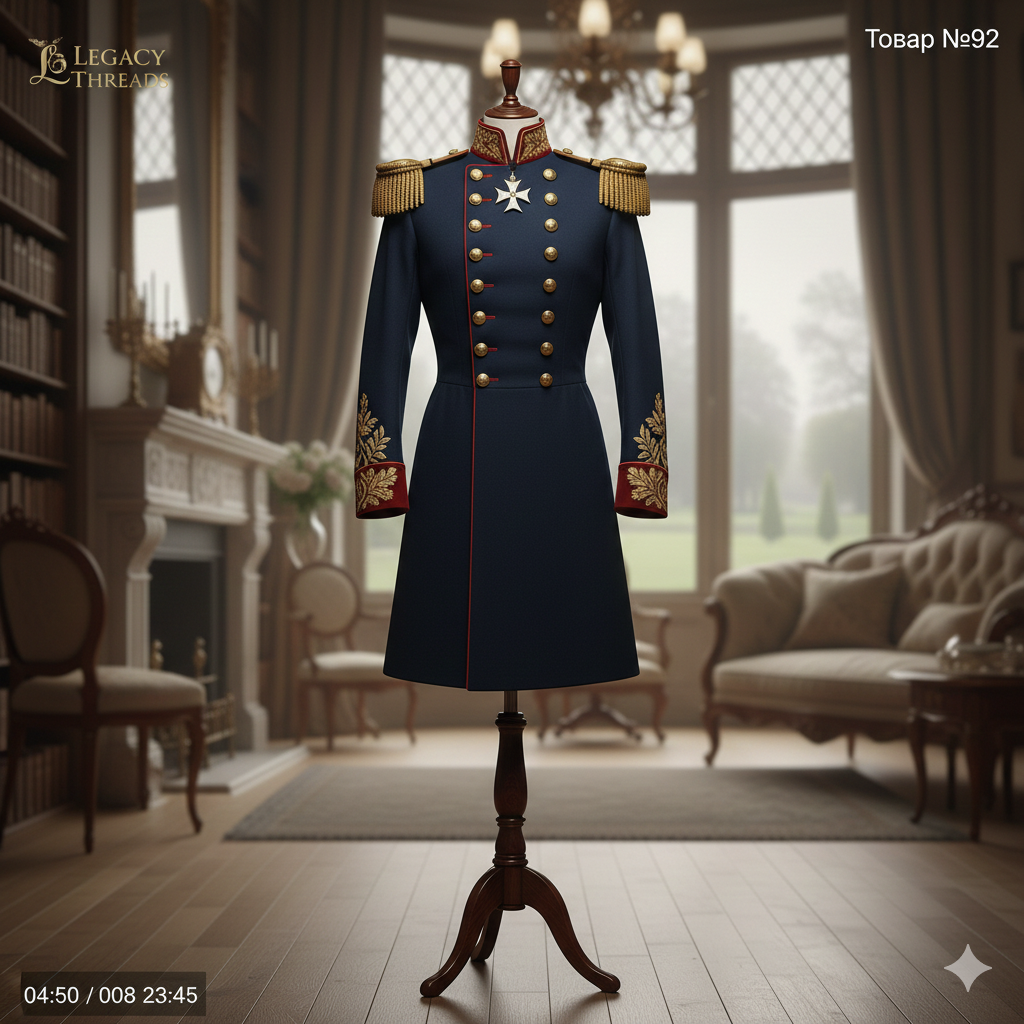
The "Royal Guard" Ceremonial Tunic is a magnificent recreation of a mid-Victorian military uniform, reflecting the grandeur and strict regimental discipline of the 1870s, inspired by the personal style of European royalty such as Prince Albert or Emperor Alexander II. This tunic is a symbol of power, prestige, and impeccable tailoring.
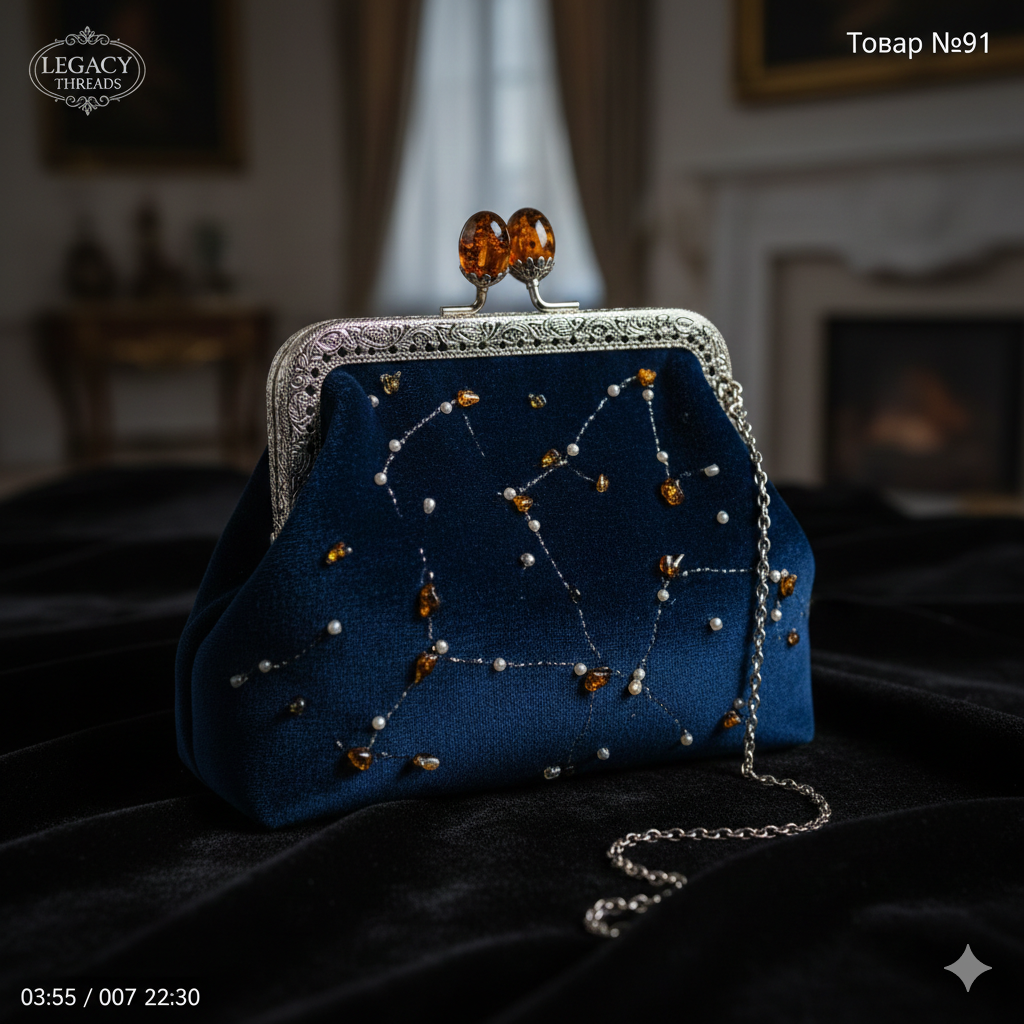
The "Velvet Midnight" Evening Reticule is a luxurious accessory perfectly suited for an aristocratic lady attending a grand ball or an evening at the opera in mid-Victorian London, circa 1870s. This reticule combines opulent materials with intricate craftsmanship, a hallmark of the era's sophisticated taste.
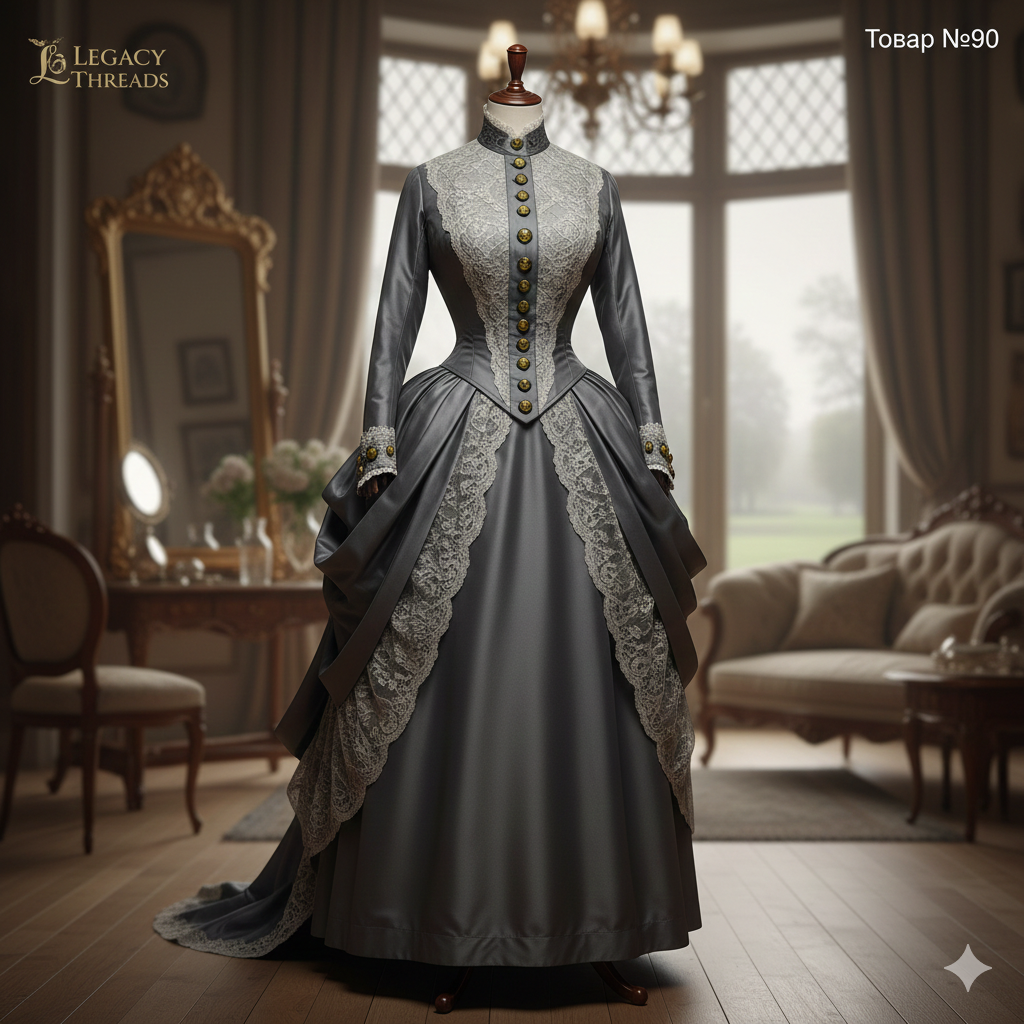
The "London Fog" Promenade Gown is a definitive example of high-Victorian fashion from the mid-1870s, characterized by the dramatic "bustle" silhouette. This gown is designed for afternoon social calls or a fashionable stroll through St. James’s Park, capturing the essence of an era obsessed with intricate drapery and structured elegance.
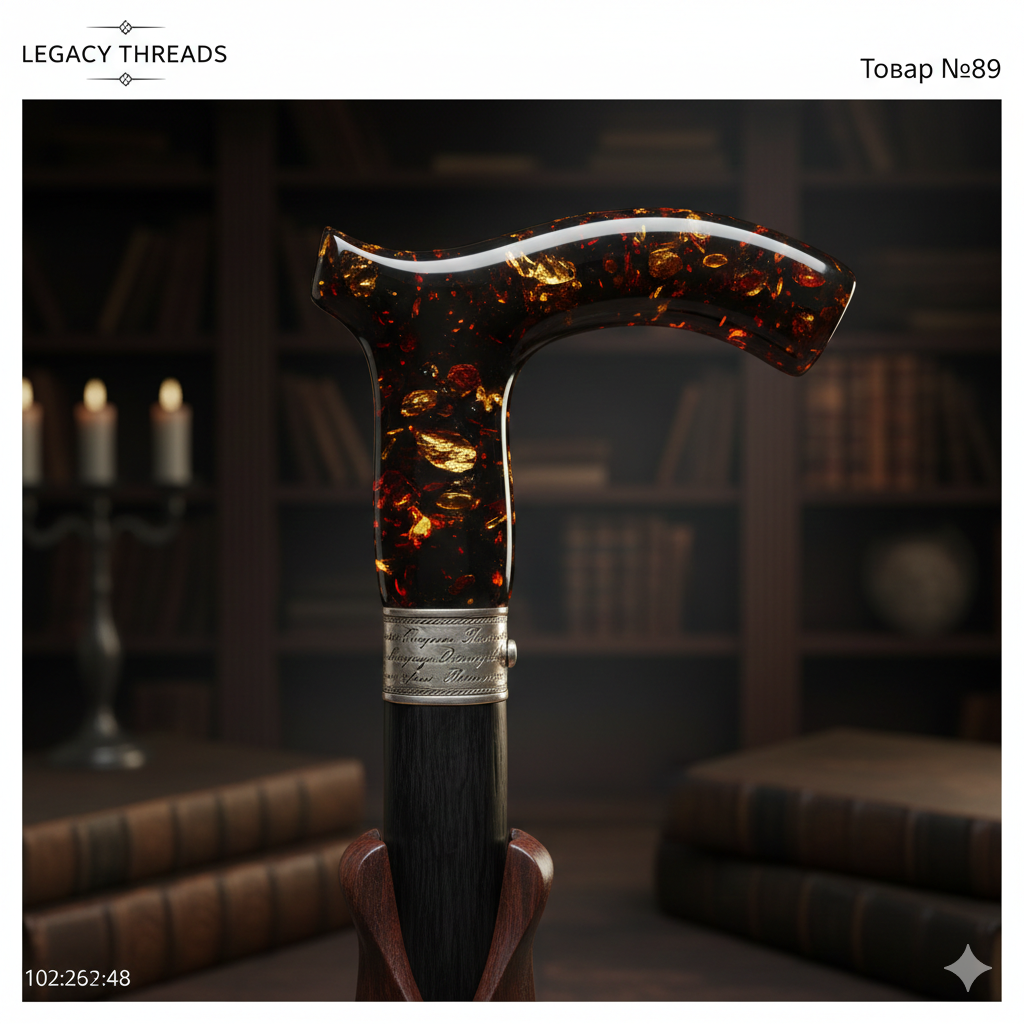
The "Duelist's Code" walking stick is a masterpiece of the Russian Romantic era, reflecting the sharp wit and daring spirit of Alexander Pushkin. In the 1830s, a cane was not merely a walking aid but a sophisticated weapon of style and, occasionally, a hidden tool for a man of honor.
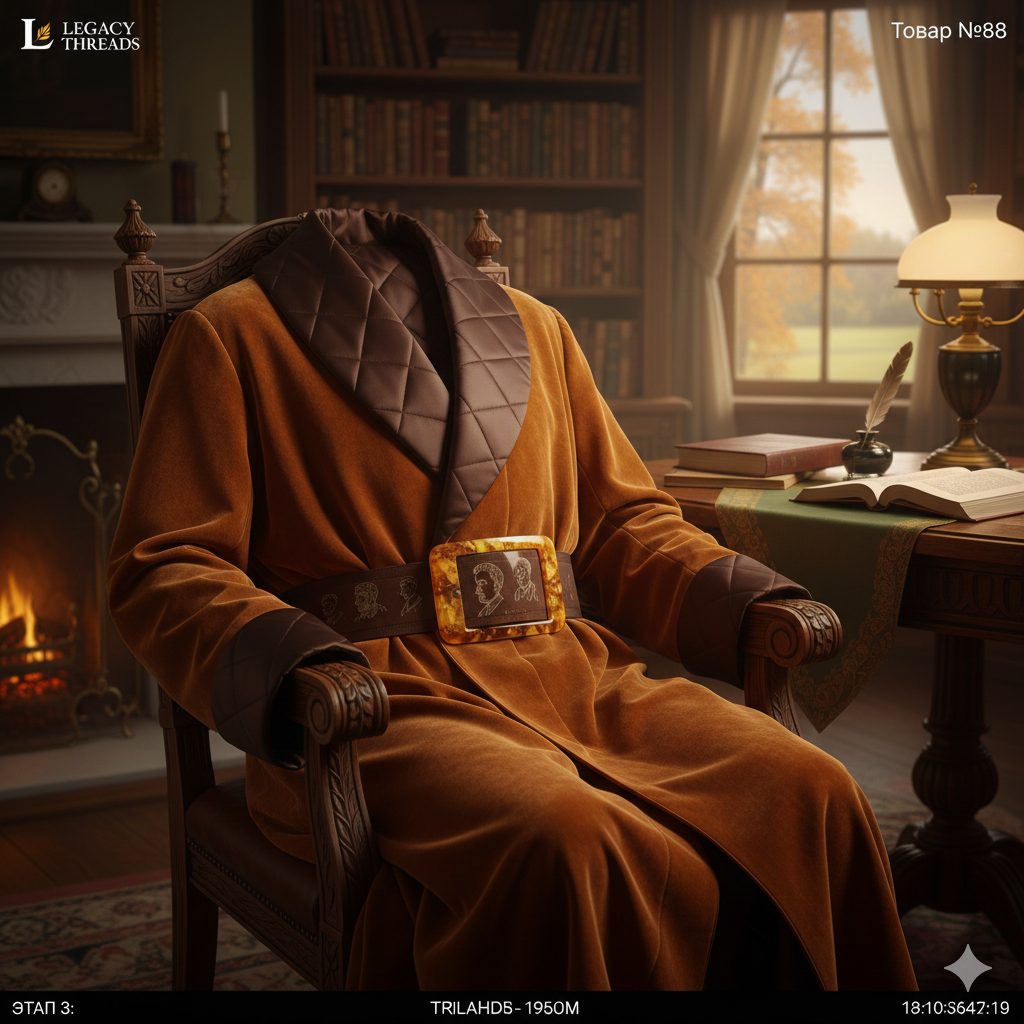
The "Boldino Autumn" Banyan is an exquisite recreation of the informal scholarly attire worn by the Russian nobility during the late 1820s and early 1830s. Immortalized in the famous portraits of Alexander Pushkin, this garment represents the intersection of Eastern influence and European comfort—a staple of the Romantic writer's private world.
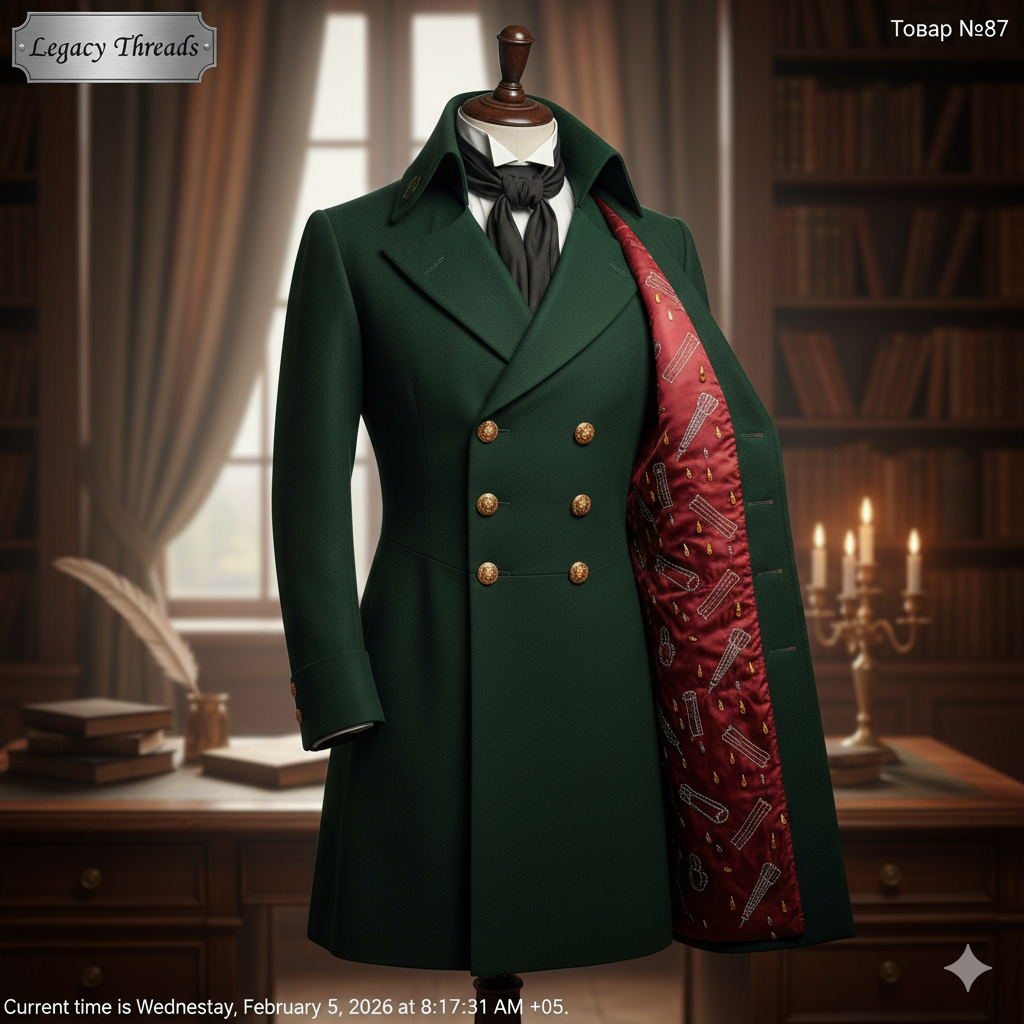
The "Lyceum Dandy" Frock Coat is a meticulously recreated piece inspired by the sartorial elegance of the Russian Romantic era, specifically the 1820s-1830s, a period famously associated with Alexander Pushkin's youth and flourishing literary career. This coat embodies the sophisticated yet understated grandeur of a St. Petersburg gentleman.
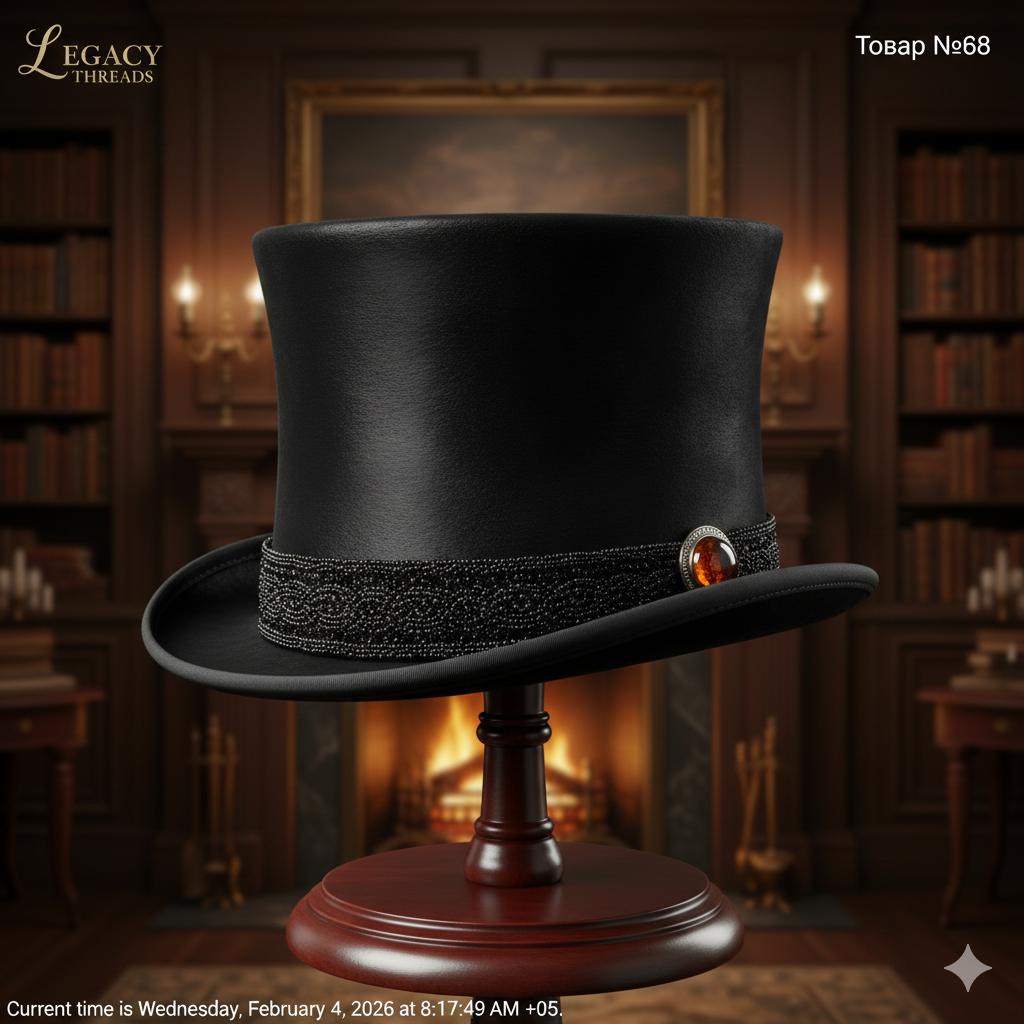
The "High Society" Top Hat is an iconic symbol of the mid-Victorian gentleman, circa 1850s, signifying impeccable taste, social standing, and formal propriety. This particular model is crafted for grand occasions, such as visiting the opera, attending a formal dinner, or a stroll through Hyde Park on a Sunday afternoon.
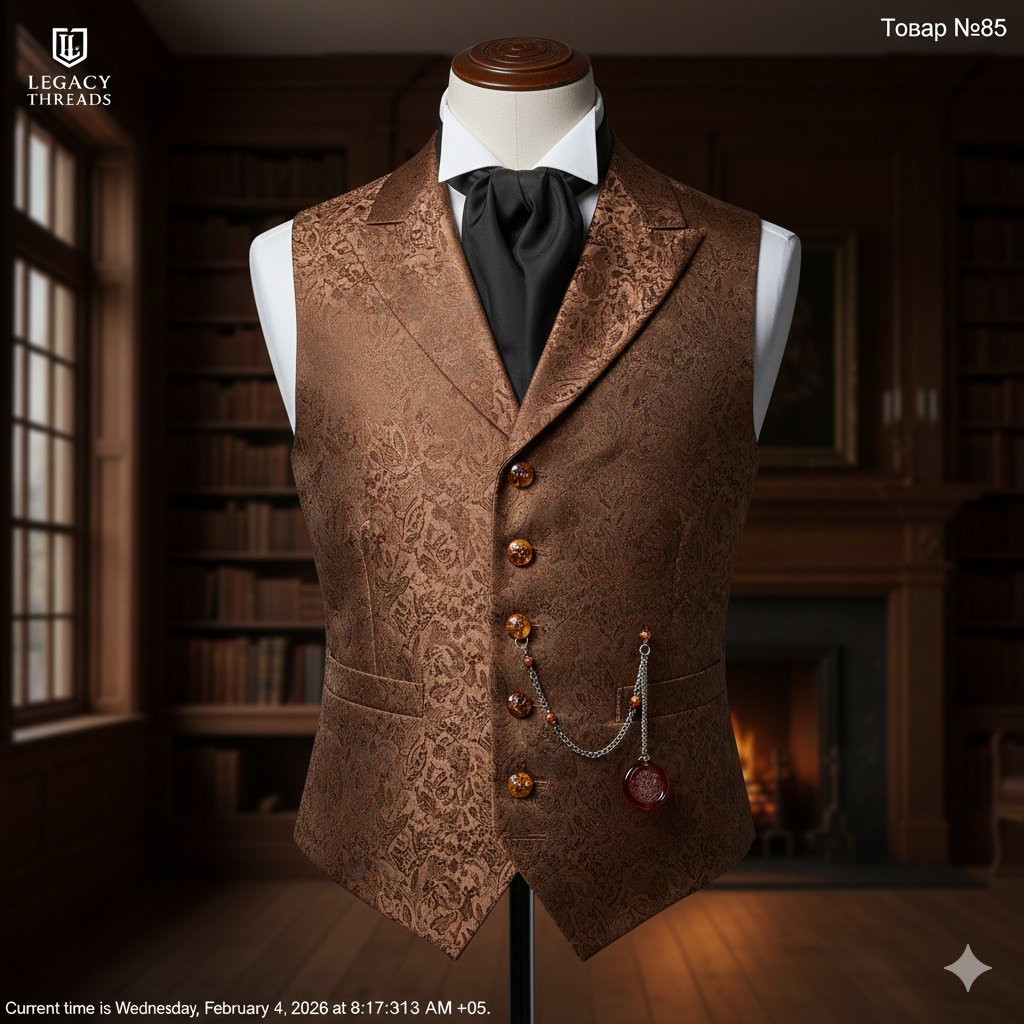
The "Amber Cabinet" waistcoat is a quintessential piece of 1850s mid-Victorian menswear, designed to offer a sophisticated focal point beneath a frock coat or the newly popular Chesterfield. In an era of increasingly sober outer garments, the waistcoat remained the canvas for a gentleman's personal flair.